A cross-chain swap can look like a single trade, but the underlying operation is usually a chain of separate permissions, messages, and settlement steps. That is the counterintuitive part: the exchange rate is often easier to understand than the authority you grant along the way. A user may be moving from an Ethereum asset to a token on another EVM network, yet the real risk may begin before any swap occurs, when a token approval allows a contract to spend funds later.
This distinction matters for anyone in the United States using decentralized finance. Wallet software does not remove smart-contract risk, bridge risk, network congestion, or user error. It can, however, make those risks more visible at the point of signing. The practical goal is therefore not to find a wallet that makes every transaction “safe,” but to develop a process that separates swapping, approving, verifying, and revoking into decisions you can inspect.
Why a cross-chain swap is more than a trade
On one blockchain, a swap commonly involves a decentralized exchange contract receiving one token and returning another according to defined pricing and liquidity rules. The user signs a transaction, the network executes the contract, and the result is recorded on that chain. A token approval may be required first because many ERC-20-style tokens do not allow a contract to transfer funds unless the holder has explicitly authorized it.
A cross-chain swap adds another layer. The asset may first be deposited into a bridge, liquidity network, or routing system. A message, proof, or order then coordinates activity on a destination chain. The destination asset may be released from liquidity already present there, or it may be represented through a token issued by a cross-chain system. These models are not interchangeable. A fast route may depend on pre-funded liquidity; another may depend on a verification process that takes longer but follows a different security design.
The useful mental model is not “one swap across two chains.” It is “a sequence of state changes connected by an interoperability assumption.” The source chain must recognize the deposit or authorization. The cross-chain system must interpret that event correctly. The destination system must release, mint, or route the expected asset. A failure in any link can produce delays, refunds, unexpected fees, or exposure to a system whose security is different from that of the underlying blockchains.
This is also why a wallet cannot independently guarantee the outcome of a cross-chain transaction. It can help you inspect the network, recipient, token, and requested permissions, but it does not control the bridge’s validators, relayers, liquidity providers, smart contracts, or governance. If a route depends on a weak or compromised intermediary, a clear wallet warning is useful but not a substitute for evaluating the route itself.
Token approvals: the permission that outlives the trade
Token approval management is frequently misunderstood as a minor technical step. In reality, an approval is a standing permission recorded in a token contract. It tells a designated spender contract that it may transfer a specified amount of a token from your address. Signing an approval usually does not transfer the tokens immediately. It changes what the spender is allowed to do later, subject to the amount and rules encoded by the token contract.
That creates an important asymmetry. A swap may finish in seconds, but an approval can remain active until it is reduced or revoked. If the approved contract is later exploited, upgraded in an unsafe way, or impersonated through a malicious interface, an excessive approval can become relevant even though the original trade is long forgotten. This does not mean every approval is dangerous. It means approval duration and scope are part of the transaction’s risk, not administrative details to ignore.
There is a common misconception that approving the exact amount is always unquestionably safer. It generally limits the immediate spending authority, but it can require another approval for a later trade, creating more transactions, fees, and opportunities for the user to sign the wrong request. Unlimited approval can be more convenient and may reduce repeated on-chain actions, but it leaves a larger permission surface. The correct choice depends on the contract, the asset, the user’s expected activity, and the cost of managing permissions.
For occasional users, a small or exact approval may be a sensible default because it reduces dormant authority. For an experienced user interacting frequently with a well-understood protocol, a broader approval can be a deliberate operational choice rather than an automatic mistake. The key is to distinguish convenience from security. “Unlimited” is not a synonym for fraudulent, and “exact” is not a synonym for risk-free; both are parameters in a trade-off.
Users should also remember that revoking an approval is itself a blockchain transaction. It costs network fees and does not undo a transfer that has already occurred. Revocation prevents future use of the permission; it cannot reverse a completed exploit or recover funds sent to an incorrect address. This boundary is easy to miss, especially when wallet interfaces use reassuring language around cleanup.
What a careful wallet review should examine
A browser wallet extension is best understood as a signing and account-management interface, not as an insurance policy. Before installing any extension, users should confirm that the download source is the project’s official distribution path, inspect the publisher information, and avoid software promoted through unsolicited advertisements, direct messages, or search results that imitate a brand. A fake extension can request the same seed phrase as a legitimate one and defeat every later safety habit.
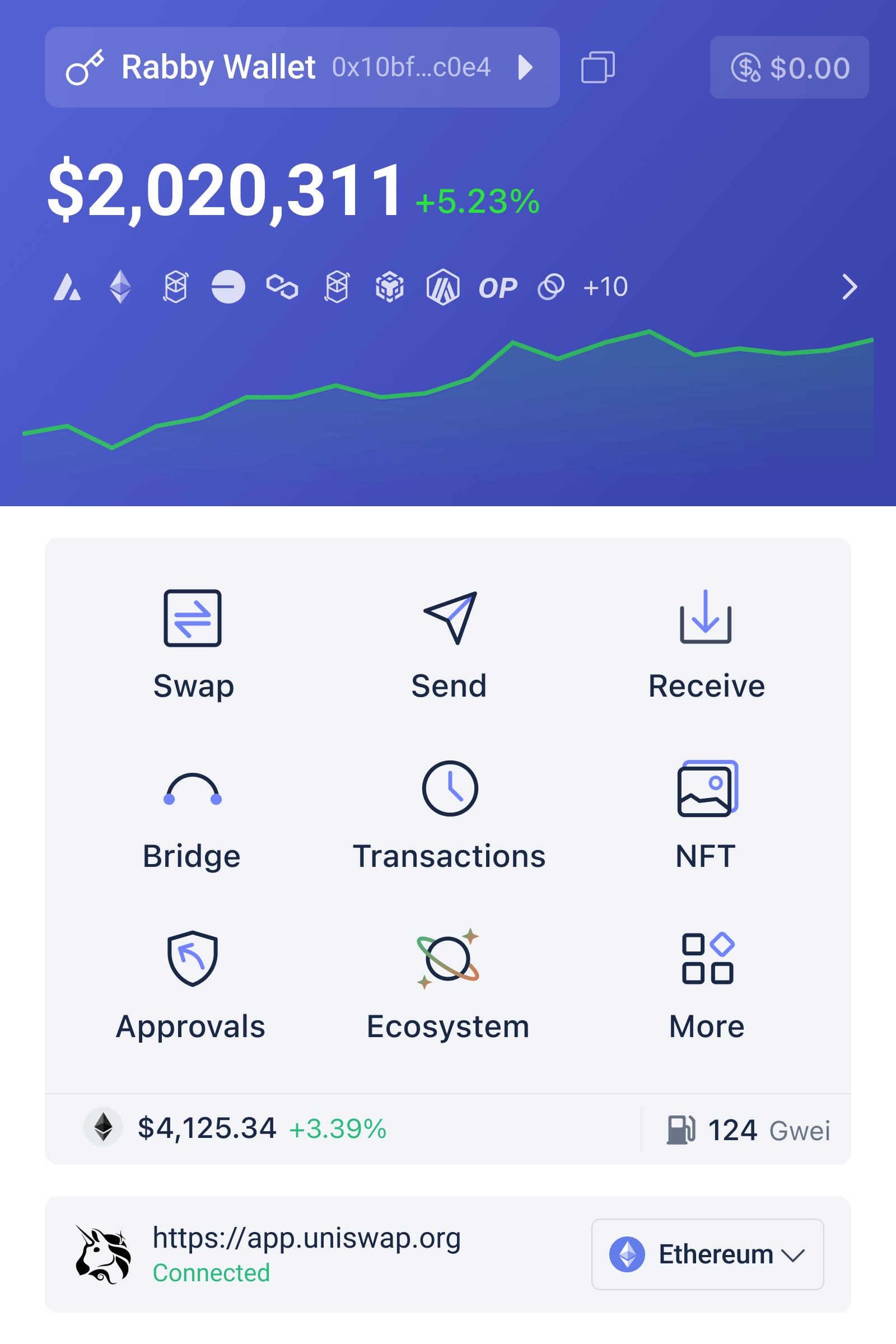
For readers evaluating the rabby wallet extension, the installation decision should be treated as a security decision. Use a supported browser such as Chrome or Brave only after verifying the source, create or import an account through the wallet’s normal flow, and store the recovery phrase offline rather than in a screenshot, email, cloud note, or browser password field. A wallet interface can help display transaction context, but the recovery phrase remains the controlling credential.
When a DeFi application requests a signature, first identify the network and the asset involved. Then distinguish an ordinary transaction from a token approval, a permit-style signature, a contract interaction, or a message that may authorize an off-chain order. These categories can look similar to a hurried user but have different consequences. A message signature may not consume gas, yet it can still carry authority if a protocol later submits it on the user’s behalf.
For an approval, inspect the spender rather than focusing only on the token name. The token is what may be spent; the spender is the contract receiving permission. A familiar token displayed in an unfamiliar network context should prompt a pause. So should a request for a much larger allowance than the swap requires, a recipient that does not match the intended protocol, or a transaction whose method and parameters are difficult to reconcile with the action described on the website.
Wallet warnings and transaction simulations can improve the decision, particularly when they identify asset changes, suspicious approvals, or a mismatch between the requested action and the expected result. But these tools have limits. Simulation depends on the information available at that moment and may not capture every future contract behavior, governance change, oracle failure, bridge failure, or social-engineering trick. A warning is evidence to consider, not a guarantee that an unsigned transaction is harmless.
Historical evolution and the current state of DeFi wallets
Early browser wallets largely asked users to trust their own ability to interpret raw transaction data. As DeFi expanded across Ethereum-compatible networks, the problem changed. The user was no longer evaluating one familiar chain and one application; they were navigating multiple networks, token standards, bridges, aggregators, approvals, and rapidly changing contract deployments. Wallet design gradually moved toward contextual warnings, clearer network selection, and more readable summaries.
The recent project update supplied for August 24, 2026 presents Rabby Wallet as a wallet for Ethereum and EVM networks, with an emphasis on broad chain support and getting started through Chrome and Brave. That positioning reflects a real user need: EVM compatibility can make assets and applications easier to access across networks, but it also increases the number of contexts in which a user can sign. More network choice improves flexibility while expanding the surface area for wrong-chain transactions, look-alike tokens, and fragmented approval records.
The non-obvious lesson is that a multi-chain wallet can make the interface simpler while making the underlying risk model more complex. A single portfolio view may hide the fact that approvals live separately on each network. Revoking an allowance on one chain does not revoke an allowance for the same token address on another chain. Likewise, a familiar contract address on one network should not automatically be treated as trusted on every EVM network.
For this reason, approval hygiene should be organized by chain and spender. After completing a cross-chain activity, record which networks were used, which token contracts were approved, and which applications received permissions. If the route involved a bridge or aggregator that you do not expect to use again, review whether its allowance remains necessary. Users with meaningful balances may also prefer a separate wallet for experimental applications, keeping long-term holdings away from routine testing and high-risk contracts.
A reusable decision framework for cross-chain activity
Before signing, ask four questions. First, what exactly is leaving the source address: a native asset, a standard token, or a token representation whose redemption depends on another system? Second, who receives permission to move it, and is that permission limited to the intended amount? Third, what must happen between the source and destination chains for the result to arrive? Fourth, what is the recovery plan if the route is delayed, the destination asset is not the expected token, or the application becomes unavailable?
These questions separate price risk from execution risk and permission risk. Price risk concerns slippage and market movement. Execution risk concerns failed transactions, congestion, liquidity, and route design. Permission risk concerns what a contract may do after the user signs. A favorable quoted exchange rate addresses only one part of this set. A route with low fees can still be unattractive if it requires broad permissions or relies on assumptions the user cannot evaluate.
For larger transfers, a staged approach is often more informative than a confident guess. Verify the network and destination address, perform a small test where the economics permit it, confirm that the received asset is the intended one, and then consider the larger transaction. This cannot protect against every protocol-level failure, and it introduces additional fees, but it can expose wrong-chain mistakes and interface misunderstandings before the full balance is involved.
One practical boundary deserves emphasis: a wallet cannot make a custodial or non-custodial system equivalent to a bank account. In the US, users may also face tax reporting, compliance, and consumer-protection questions that depend on the asset, transaction history, and personal circumstances. A wallet can display balances and transactions, but it is not a tax adviser, a regulated exchange, or a dispute-resolution service.
What to watch next
The next stage of wallet design will likely be judged less by the number of supported chains than by the quality of permission and execution context. If wallets can consistently explain the difference between a swap, a bridge deposit, an approval, and a signed order, users may make fewer category errors. If interfaces merely aggregate more networks without improving interpretation, convenience could outpace comprehension.
That future remains conditional. Better warnings cannot solve insecure bridge architecture, dishonest websites, compromised devices, or careless recovery-phrase storage. The strongest signal to watch is whether wallet interfaces make authority legible: who can move funds, on which chain, for how much, and for how long. That is a more meaningful measure of safety than a simple claim that an extension is fast or secure.
Frequently asked questions
Does a cross-chain swap require a token approval?
Often, but not always. If a smart contract must transfer an ERC-20-style token from your address, an approval or an alternative authorization method may be required. Native assets such as ETH use a different transfer model. The application should explain the requested permission, and the wallet transaction details should be consistent with that explanation.
Should I revoke every token approval after using DeFi?
Not automatically. Revocation reduces future spending authority but costs a network transaction and does not undo completed transfers. Review approvals by chain, token, spender, and allowance size. Revoking permissions to applications you no longer trust or expect to use can be reasonable, while repeatedly revoking and re-approving familiar contracts may add cost without proportionate benefit.
Can a wallet extension guarantee that a swap is safe?
No. It can improve visibility into networks, contract calls, approvals, and expected asset changes, but it cannot guarantee the security of a bridge, decentralized application, token issuer, browser, or private key. Treat wallet analysis as one layer of review, alongside verifying the application source, limiting approvals, and using a separate account for higher-risk experimentation.
The central misconception is therefore worth restating: a cross-chain swap is not merely an exchange rate displayed in a wallet window. It is a chain of permissions and assumptions. A careful user downloads software from a verified source, checks the chain and spender, treats approvals as continuing authority, and evaluates the route’s failure modes before signing. That discipline does not eliminate DeFi risk, but it turns an opaque click into an informed technical decision.